What is Home for you?
TCKs experience a lack of true belonging, which leads to a feeling of belonging everywhere and nowhere at the same time. One of the paradoxes of being a TCK is that belonging is often found in relationships with others who share a similar background.
“As a third-culture kid, I don’t belong anywhere… I’m always too much of a stranger. Like all third-culture kids (TCKs), I always dread the same question: ‘Where are you from?’” -JJ Wong
A third-culture kid (TCK) is a person who has spent a significant portion of their formative years outside their parents’ culture. The TCK forms relationships with all cultures, yet does not fully belong to any of them. Although elements of each culture are assimilated into the TCK’s life experience, their sense of belonging is tied to relationships with others who share a similar background.
David Pollock believed that many of the challenges related to identity and belonging that TCKs often face stem, at least in part, from their complete, profound, and frequent shifts in cultural norms during the first 18 years of life. This disrupts the traditional developmental process through which children learn identity from the world around them and develop a sense of belonging to a place or a national community.
The third culture is neither an assimilation into the new culture nor a fusion of two different cultures, but is itself a distinct way of life, different from both the home culture and the host culture.
What, then, is the shared experience of those who live and grow up in the third culture? Virtually all TCKs share the following experiences:
Growing up in a genuinely intercultural world. TCKs do not merely study other cultures; they experience them firsthand.
Growing up in a highly mobile world. With every move from the home culture to the host culture or vice versa, some family members or friends are left behind while others are met. Everyone experiences some degree of mobility and associated loss in their lives, but the repeated cycles of loss represent one of the greatest challenges TCKs face.
TCKs do not feel they belong anywhere or to any particular group of people. Often in the host culture, TCKs do not resemble their peers, but even if they may look similar to the children of the culture they are in at a given moment (whether the host culture or the culture of their passport), they often do not think like those around them.
There is an expectation of returning home. TCKs are not immigrants. They do not expect to live permanently in the host culture, but they hold the expectation that “one day they will return home.” This affects TCKs’ ability to put down roots in a place.
TCKs often identify strongly with the system their parents are part of or work for. Many TCKs feel they have a representative role. They believe it is their responsibility not to let down the system their parents work for. Furthermore, the people around them expect the children’s behavior to align with the goals and values of the organizational system their parents work for.
“When I’m at school in the host culture, my classmates always tell me, ‘It’s because you’re American.’ For example: you’re good at volleyball because you’re American. Which I hate. But then, when we go back to the United States, my cousins tease me when I can’t spell a word in English correctly or because I don’t know something about the culture or how things work there. No matter where I am, I never feel completely part of it.” -TCK, 18 years old
The challenge for many TCKs and their families is that they may not be aware of this third culture—the culture they truly belong to. They don’t feel completely at home in the host culture, not because they don’t integrate, love, or appreciate the host culture—because many TCKs do—but because they might retain a different accent, have a different skin color or physical appearance, or have certain cultural or religious practices that set them apart from the local population. However, they do not feel completely at home in the culture of their passport country either. And so they have the feeling of not truly belonging to any cultural group. That is why the third culture is so important to TCKs. It is a unique place of belonging for their experience. It is there that they find their sense of home, identity, and belonging.
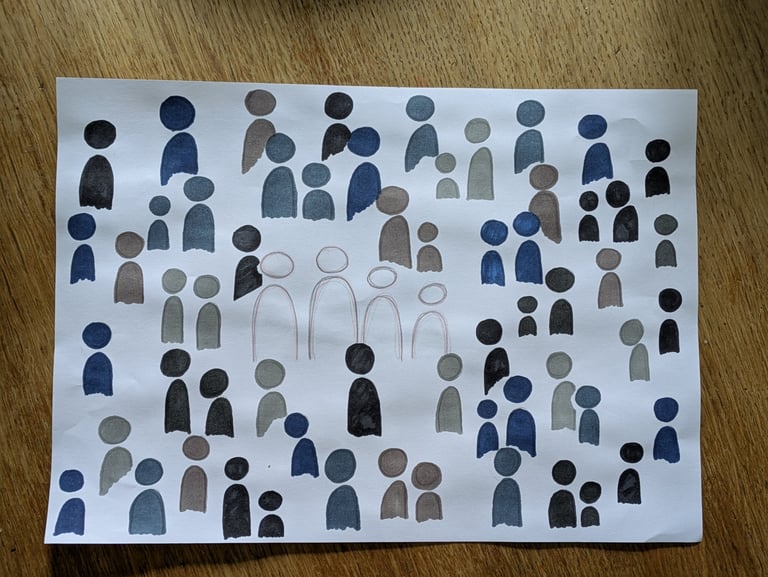
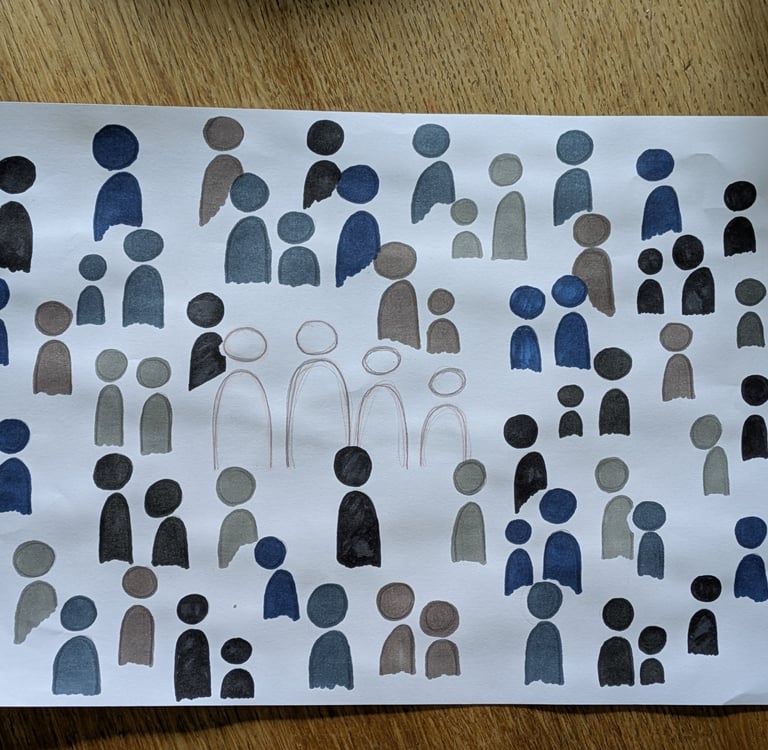
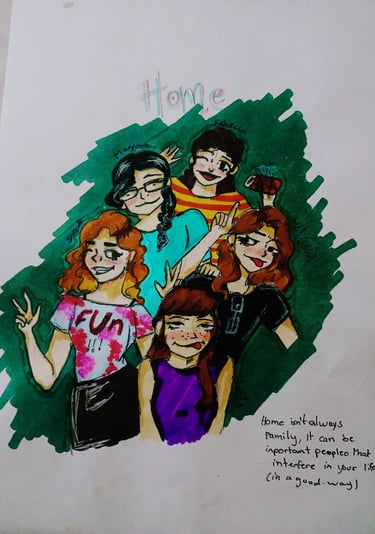
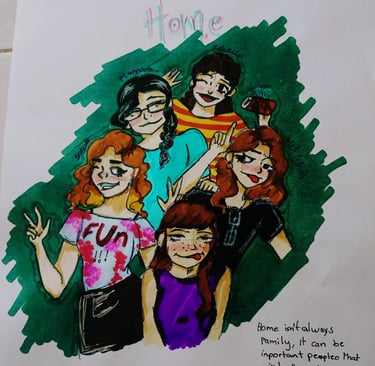
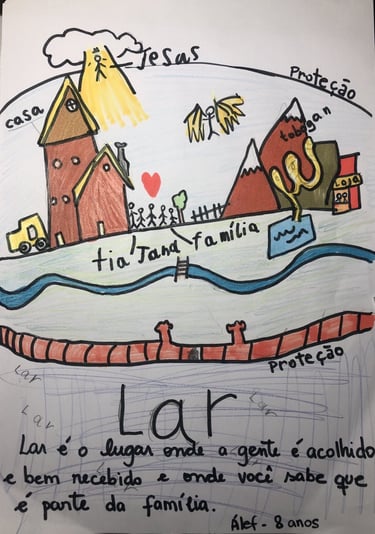
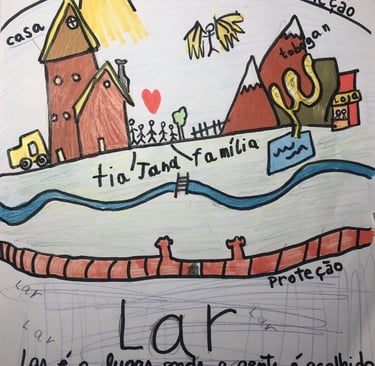
That is why, we asked a group of TCKs of various ages to draw “What does HOME mean to you?” None of them drew a place. From young TCKs to ATCKs, “home” was not based on a building where they physically live, a country, or even a culture. Their sense of “home” was in the people around them. TCKs often found their sense of home in their family, in the team their family was part of in the field, and/or in other TCKs who understood and shared their life experiences and identity.
Why is it important to be aware of this as parents of TCKs, as members of teams that include TCKs, or as TCKs ourselves?
It is important both to help TCKs understand themselves and their sense of identity, and to help them build relationships with other TCKs within the global community. Research on PCEs in TCKs has shown that two of the eight pillars are:
They have friends who support them.
They feel a sense of belonging with peers, mentors, and teachers.
TCKs need to feel like they belong. We all need to feel a sense of belonging. In fact, it is one of the positive childhood experiences that influence the long-term mental and physical health of all people. However, TCKs have an even stronger need to feel like they belong because they experience daily situations that make them feel as though they don’t belong anywhere. They need more reassurance and a safe place, because the evidence around them speaks louder. They need to know they belong to this special group of people who understand and share similar experiences.
If you are a parent of a TCK, especially if you are in the midst of a move or transition, consider doing this exercise with your child or children:
Sit down at a table with your TCK and a sheet of paper, crayons, pens, and pencils.
Ask them: “What does home mean to you?” Can you draw it for me? Then give them the time and space to draw their representation of “home.”
When they’re finished, ask them to explain their drawing to you. Ask them what certain words or objects represent to them. Ask them about the people they drew and why they’re important to them.
If they’ve drawn people from your current team and you’re soon moving to a new place with a new team, give them time to talk about the loss this entails. Don’t solve the problem for them. Don’t downplay it by saying, “You’ll meet new people and we’ll have a new team!” Listen to them, sit with them, and give them the space to process their grief.
Show them affection and take time to pray together.
Come back to what they’ve shared. If they’ve talked about special people on your team, or about where you currently live, make sure to create a space and time where they can say a meaningful goodbye to these people. If they’ve shared words that express what “home” means to them, or how family is like a home to them, then talk with them about how you can work together to build that sense of home in the new place where you’ll be living. Ask them what they think might help them during this time of change.
If you’re unsure how to approach this kind of conversation with your child, let us know! We’re here to help. You might also consider talking to another TCK and asking them what helped them, or reaching out to another parent of a TCK and asking how they handled the change and transition as a family.