Emoji Jar: a Check-in with your Family
Want to know how your TCKs are doing but don't know how to start a conversation? Try this simple method...


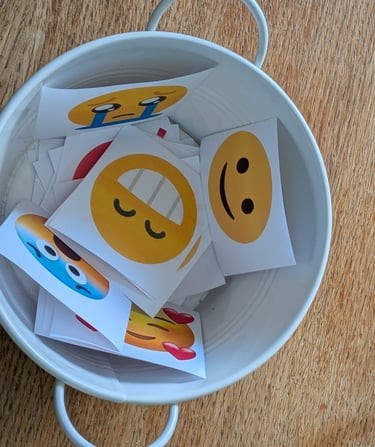
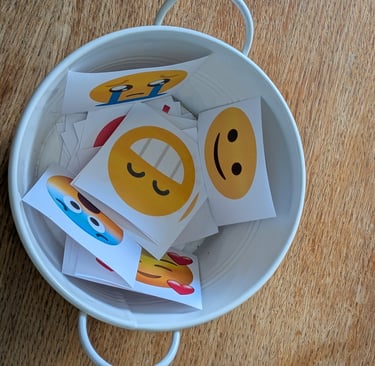
Jar of Emojis
This activity is a simple way to have a conversation as a family. Once a week, during meals or at a time you’ve set aside to be together, talk, and pray as a family, use your jar of emojis to have a conversation.
Just print out the sheets with the emojis and cut out each one. Put the emojis in a jar, bowl, or basket.
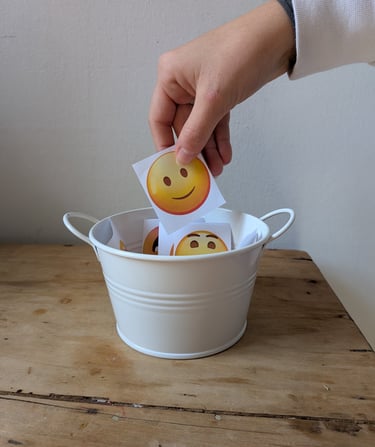
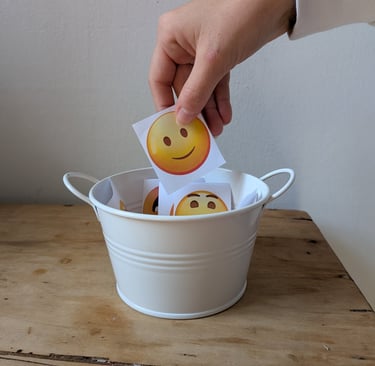
During your family time, take one emoji from the jar for each child and show it to the first one.
Ask them to share a moment during the day or week when they felt that emotion.
There is no right or wrong way to interpret the emotion represented by each emoji. The important thing is that they have the chance to express their feelings and emotions.
Take turns drawing the emojis, giving each child and adult a chance to share when they felt a particular emotion during the week.
This is a simple activity to help recognize emotions and give others space to share what they’re feeling.
End your family time by praying for one another.
Why is it so important to make a habit of checking in daily or weekly to find out what’s on everyone’s mind? Why is it important to recognize our own emotions and help our children do the same? Adverse childhood experiences (ACEs) are more common among third-culture kids (TCKs), mainly due to the chronic stress caused by high mobility. Some of these difficulties aren’t immediately obvious while the child is growing up and still immersed in this third-culture experience. It’s important, however, to realize that TCKs face unique challenges and difficulties. When adults assume that TCKs’ challenges lie in the future, they aren’t prepared to help their children effectively navigate the hidden challenges that arise from a young age. What parents may not realize is that children lack the sophisticated language to express the paradoxical feelings of their experience. For TCKs, it is disorienting to feel excited about visiting grandparents and cousins while simultaneously feeling a deep sadness at leaving a place and friends they love.
These check-ins create a space where your TCK feels safe to understand and express their emotions. A moment when they feel heard. Many TCKs struggle to express what they’re going through simply because they can’t find a safe place to do so. Local people think their life is one big adventure; relatives miss them and the TCK doesn’t want to add to that burden; local friends or friends in their passport country don’t understand the challenges they’re facing; parents are often weighed down by their own commitments, burdens, and worries, and the TCK can’t find a place where they feel free to talk about the good and the bad. But when you make it a family habit to ask, “What did you experience this week? What went well? What went wrong? What’s worrying you? Tell us a story… a feeling.” And everyone shares, then you pray together. That feeling no longer seems so big and scary, and your TCK no longer feels so alone. And when you do this every week, there isn’t a buildup of situations and burdens that makes it hard for them to process what they’re feeling.
Why emojis?! Emojis can be a tool that makes it easier for younger children to share their stories. They help children begin to recognize different emotions and express more than just one or two, as they share stories and experiences. Emojis can be disarming for slightly older kids who, if you simply ask, “How are you?” might not know how to tell you what they’re feeling, or might feel intimidated by having to share what they feel inside. Randomly using an emoji to tell stories about the week can help your young TCK feel free to share because the question is linked to an emoji and not to a specific situation.
Start early! Don’t wait until your TCK is a teenager to try to talk about their emotions. It will be difficult to establish a new habit when there’s resistance to talking about what’s on their mind and in their heart. If you create a space for this from an early age, it makes it easier to talk naturally about the emotions and situations everyone is going through at any given time.
Listen without judgment. Listen. Don’t judge. Don’t downplay what they’re feeling or saying. Just listen. Offer affirming words: “It sounds like you’ve been really worried about the exam this week!” “You were scared when we went to the market the day before yesterday.” Don’t try to offer solutions right now. Just listen. If you want to ask a question, that’s fine too: “What do you think might help you feel safer if we go to the market again?” The important thing in these moments isn’t to solve every problem, but rather to create a safe space for everyone’s emotions and to make them feel heard.
Pray together. Experience prayer together as a family. We can bring every emotion to Jesus. No emotion is too big or too bad for Jesus. Let’s bring everything to Him and ask Him to help us. He loves us and cares for us. He asks us to give Him our burdens. Psalm 55:22 says, "Cast your cares on the LORD and he will sustain you; he will never let the righteous be shaken."