
Discovering new cultures
Other tools and activities to introduce the concept of culture:
An effective tool can be that of using images or videos to show different cultures, or cultural rules. For example: Print three sets of images for each category from three distinct cultures —greetings, forms of transportation, a meal “at the table.” Evaluate together which cultural norm you are looking at, and the differences between the various images. You can also ask them to guess in which country the photo was taken.
Identify together the norms and rules of your own culture (always eating pasta at lunch, greeting with a kiss, other examples?). Make a written list on a sheet of paper.
Do games or activities that introduce new cultural norms (use chopsticks to pick up small objects, do a craft/drawing that represents another culture, or taste a food that comes from another country, teach a couple of phrases in another language).
An important phrase to introduce to your children when introducing culture is: "It is not wrong, it is only different."
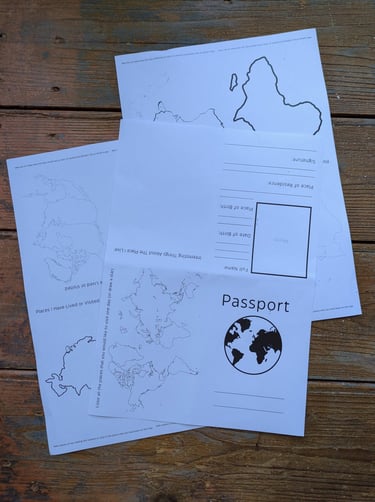
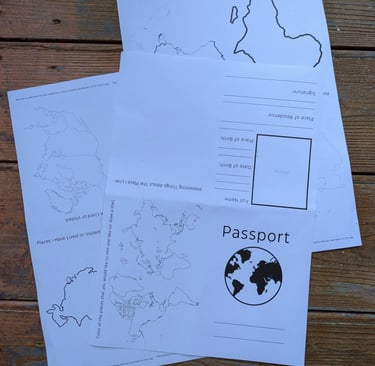
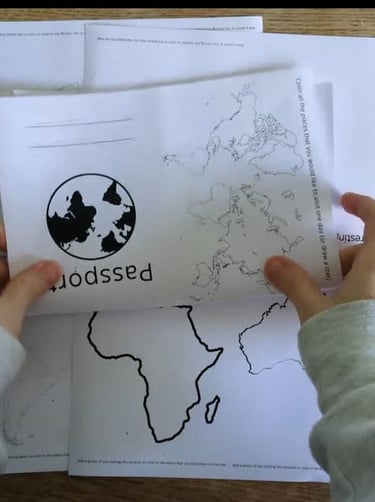
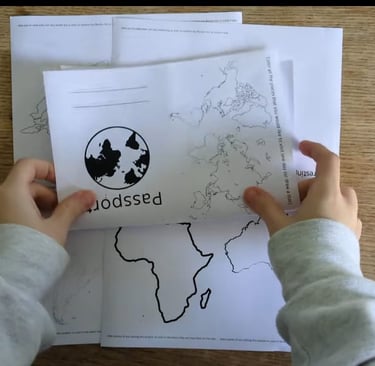
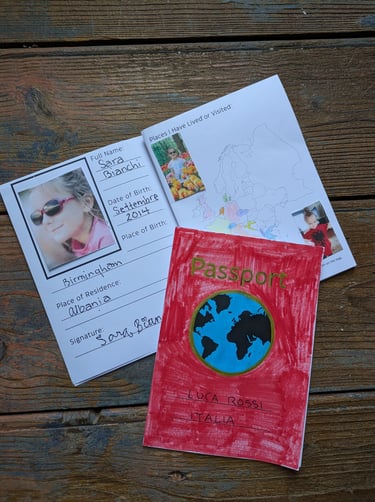
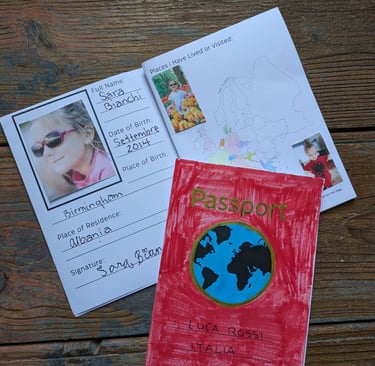
Possible Craft to explore new cultures: Create your own passport. There is a passport sheet on the activities page that can be printed and used. Help your children to fill the pages. They can color the nations in which they have already been or where they will go, print images of the place you will be moving to to add to the passport, write details on who they are, where they were born, where they have lived, mark the places in the world that they want to visit. This craft is simply a way to talk about the different places in the world, to show on the map the place in which you are going to live, and to start to talk about their identity which is influenced by the culture, or cultures, in which they have lived so far. When preparing to move to a new country, some things will change and some will stay the same. Create a passport with your child and use it to talk about identity, culture, and the adventure that awaits them.
You have decided to leave for the field. You are probably attending a training course and reading books on ministering in another country. You participate in meetings and meet other people who also have the intention to be globally mobile. But what about your children? How do you support your entire family when preparing to leave for the field?! How do you prepare your children for the challenges that await them and help them find big and small joys in this great new adventure?
There are many great resources for you to consider as practical tools and conversation starters that can be of benefit to prepare your whole family for what awaits you. One of these is the introduction to culture. Below you can find an example of a simple introduction that can be used to convey the concept of culture to your children:
How to Introduce the Concept of Culture to your Children:
What is culture? Culture is the way in which people live together and do things. It is the things that one shares with a group or in society. Cultures possess many aspects, such as:
the food that we eat
the language that we speak
the clothes that we wear
the music that we listen to
the art, the traditions, and the festivals
that which people believe
What is ethnicity? The word ethnicity speaks of the cultural origins of a person. An ethnic group is made of people who have similar traditions and customs.
Different cultures Every people group in the world has its own culture, and they are all unique. The place in which one lives is very important and influences the habits and customs of the people who live there. For example:
An individual who lives in a cold place and in the mountains will have a different culture
From an individual who lives in a hot place and in the desert
If you have smaller children it can be helpful to explain a culture in the form of a story. Below you find an example of how to introduce a new culture in the form of a brief story:
The Story of Mondo and of his Friends:
Once upon a time there was a curious child called Mondo. Mondo was a very curious child and wanted to know why people were each so different. One day he encountered many children from distant countries. Each of them ate different foods, spoke different languages, and wore different clothes. Some sang happy songs, while others played special instruments.
Mondo asked: “Why are you all so different?”
A little girl smiled and said: “This is our culture. It is our way of living, of eating, of speaking, and of celebrating together.”
Mondo then understood that every group of people has a special culture.
Then a child added: “I am part of an ethnic group. That means that I share traditions and customs with my family and with other people.”
Mondo also discovered that the place where a person lives changes many things. A child who lived among the cold mountains told him that he wore heavy clothes. Another child who lived in the hot desert told him that he carried light clothes and drank a lot of water.
At the end Mondo smiled and thought: “Cultures are like the colors of the rainbow: all different, but all beautiful.”
And from that day, Mondo loved to meet people from different cultures even more.